Class XII - Chapter 4(Flamingo) "The Rattrap" by Selma Lagerlof
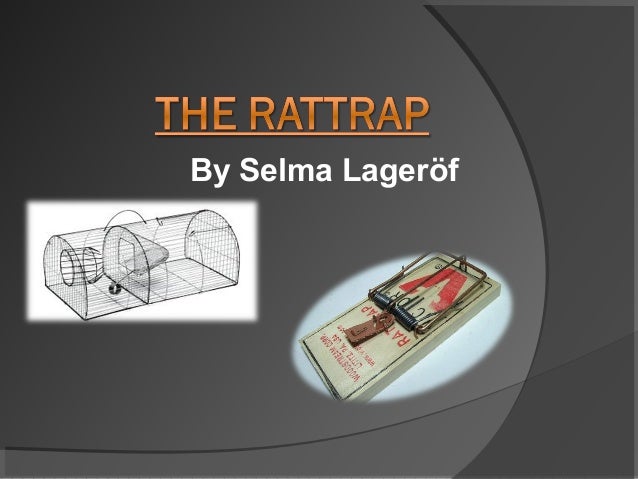
Class 12 English Chapter 4 - The Rattrap
by Selma Lagerlof
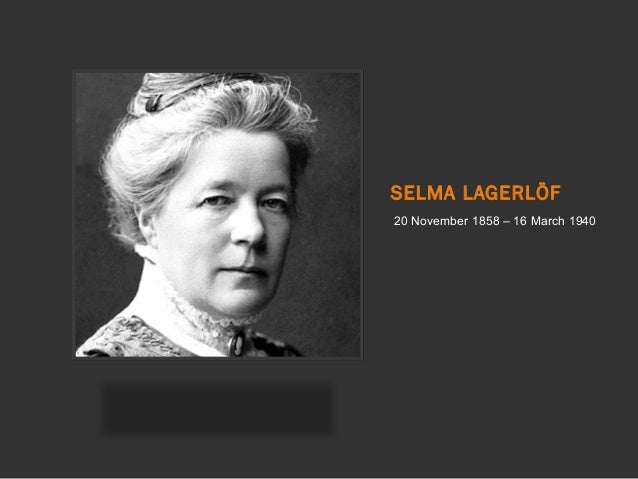
About the author
🎯 Theme of “The Rattrap”
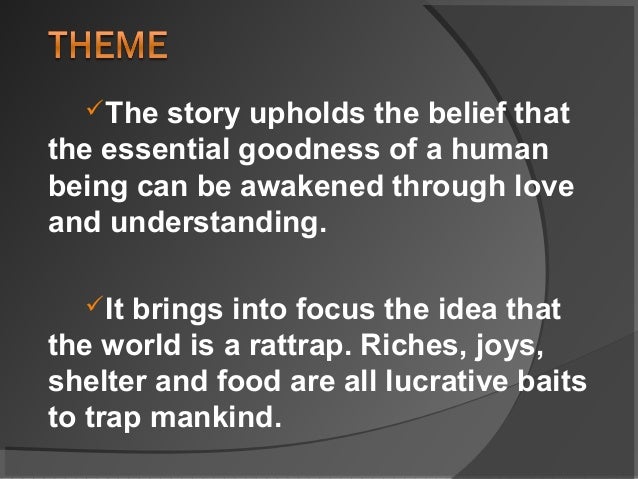
1. The World as a Rattrap
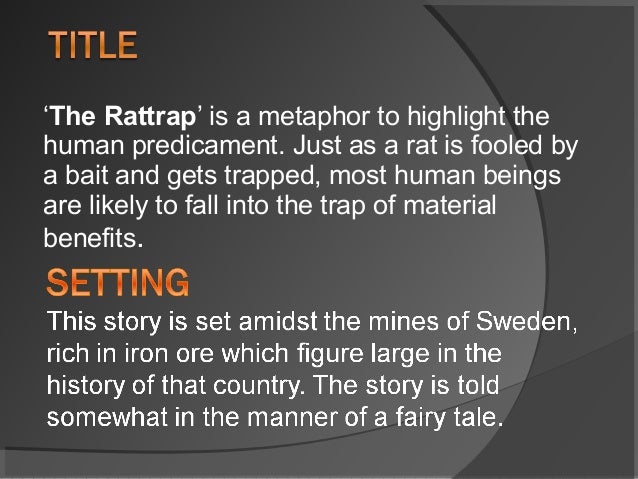
• The central idea is that life and the world are like a giant rattrap.
• Temptations like riches, shelter, and food act as bait, and once people fall into them, they are trapped in misery, guilt, or consequences.
• The peddler initially believes this idea and lives with distrust and bitterness.
2. Redemption and Human Goodness
• The story shows that no one is beyond redemption.
• Through kindness and empathy, even the most hardened or morally lost person can be transformed.
• The ironmaster’s daughter, Edla, plays a key role in bringing out the inherent goodness of the peddler.
3. Compassion vs. Judgment
• The contrast between how the ironmaster (judging the peddler) and Edla (treating him with compassion) act shows the power of non-judgmental kindness.
• True understanding and care can lead to positive change in a person.
4. Appearance vs. Reality
• The story also explores how outward appearance can be deceiving.
• The peddler, though a thief and beggar, has the potential to behave nobly when treated with dignity and respect.
🌟 Message of the Chapter:
• “One act of kindness can transform a life.”
• Everyone deserves a second chance.
• The true spirit of Christmas lies in forgiveness, generosity, and understanding.
The Rattrap- Summary
The Rattrap is a story about a rattrap seller who leads a very poor life as his earnings are very low. He has to resort to thievery and begging to make both ends meet.
He is alone in this whole world and leads a miserable life. So he starts knitting up various kinds of thoughts. One of these thoughts is of supposing the whole world as a big rattrap. His views are that the world offers us various types of baits in the form of comforts of life. This in return traps us into the rattrap of the world and leads us to various types of miseries.
Every night, the peddler had to search for shelter as he has no home. One evening he was offered shelter by an old crofter. The next morning he stole the crofter’s money which he had earned by selling his cow’s milk. To safeguard himself, the peddler chose the path through the forest which was secluded, but soon found himself trapped in the forest as he wasn’t able to find the way out of the dense forest. Later on, he finds a way to a forge and takes shelter there. Something unusual happens. The ironmaster mistakes him as an old friend and invites him to his house. The poor peddler rejects the offer due to the fear of being caught. Soon he is invited by the ironmaster‘s daughter. The next morning he is somehow stopped by the iron master's daughter for Christmas Eve even after being caught that he was a peddler and not Captain Stalhe.
The next day after Christmas, when the iron master and his daughter visit the church, they come to know that the man is a thief who had stolen money from the old crofter. The iron master and his daughter repent for sheltering a thief and wonder at what all things he would have stolen by that time. Here comes a twist as instead of stealing, the peddler gifts the ironmaster’s daughter a rattrap. She finds a letter of thanks and the stolen money inside the rattrap. The peddler thanks Edla for her kindness and requests her to return the stolen money to the crofter. This story gives us the message that goodness in a human being can be awakened at any time with your own good deeds.
✍️ Character Sketchs:
🧑🏭 1. The Rattrap Peddler
💠 Description:
• A poor, homeless man who sells rattraps made of scrap wire.
• Wears shabby clothes, has a rough appearance.
• Resorts to begging and stealing to survive.
✍️ Character Sketch:
• Cynical and bitter at the beginning; believes the world is a big rattrap.
• Steals from the kind crofter, showing his moral weakness.
• Undergoes a complete transformation after being treated kindly by Edla.
• In the end, he redeems himself, leaves behind the stolen money, and signs off humbly as “Captain von Stahle”.
• Represents the idea that love, respect, and kindness can awaken a person’s goodness.
👨🌾 2. The Old Crofter
💠 Description:
• A lonely, generous, and trusting old man.
• Lives in a cottage by the roadside.
• Offers the peddler food, shelter, and even shows him his money.
✍️ Character Sketch:
• Represents generosity and trust.
• Sadly, his kindness is betrayed by the peddler who steals his hard-earned money.
• Reflects the vulnerability of kind-hearted, isolated individuals in society.
👨🏭 3. The Ironmaster
💠 Description:
• Owner of the Ramsjö Ironworks.
• Mistakes the peddler for an old army acquaintance.
• Invites him to his home out of a sense of pride and pity.
✍️ Character Sketch:
• Quick to judge based on appearance.
• Proud and concerned about family image.
• When he finds the peddler is not who he thought, he reacts angrily and asks him to leave.
• Symbolizes conditional kindness—he’s helpful only when he thinks the man is someone important.
👩🦰 4. Edla Willmansson (Ironmaster’s daughter)
💠 Description:
• Kind, empathetic, and mature young woman.
• Persuades her father to let the peddler stay for Christmas despite knowing the truth.
✍️ Character Sketch:
• She is the true hero of the story.
• Shows genuine compassion, treating the peddler with respect and dignity.
• Her goodness inspires the peddler to change his ways and return the stolen money.
• Embodies selfless charity and the true spirit of Christmas.
The Rattrap Text with word meaning
Once upon a time there was a man who went around selling small rattraps of wire. He made them himself at odd moments, from the material he got by begging in the stores or at the big farms. But even so, the business was not especially profitable, so he had to resort to both begging and petty thievery to keep body and soul together. Even so, his clothes were in rags, his cheeks were sunken, and hunger gleamed in his eyes.

No one can imagine how sad and monotonous life can appear to such a vagabond, who plods along the road, left to his own meditations. But one day this man had fallen into a line of thought, which really seemed to him entertaining.
He had naturally been thinking of his rattraps when suddenly he was struck by the idea that the whole world about him — the whole world with its lands and seas, its cities and villages — was nothing but a big rattrap. It had never existed for any other purpose than to set baits for people. It offered riches and joys, shelter and food, heat and clothing, exactly as the rattrap offered cheese and pork, and as soon as anyone let himself be tempted to touch the bait, it closed in on him, and then everything came to an end.
The world had, of course, never been very kind to him, so it gave him unusual joy to think ill of it in this way. It became a cherished pastime of his, during many dreary ploddings, to think of people he knew who had let themselves be caught in the dangerous snare, and of others who were still circling around the bait.

The old man was just as generous with his confidences as with his porridge and tobacco. The guest was informed at once that in his days of prosperity his host had been a crofter at Ramsjo Ironworks and had worked on the land. Now that he was no longer able to do day labour, it was his cow which supported him. Yes, that bossy was extraordinary. She could give milk for the creamery every day, and last month he had received all of thirty kronor in payment.


The stranger must have seemed incredulous, for the old man got up and went to the window, took down a leather pouch which hung on a nail in the very window frame, and picked out three wrinkled ten-kronor bills. These he held up before the eyes of his guest, nodding knowingly, and then stuffed them back into the pouch.
The next day both men got up in good season. The crofter was in a hurry to milk his cow, and the other man probably thought he should not stay in bed when the head of the house had gotten up. They left the cottage at the same time. The crofter locked the door and put the key in his pocket. The man with the rattraps said goodbye and thank you, and thereupon each went his own way.
In a good season: early enough
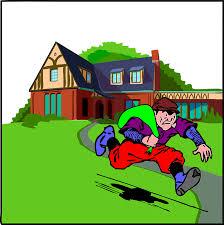
But half an hour later the rattrap peddler stood again before the door. He did not try to get in, however. He only went up to the window, smashed a pane, stuck in his hand, and got hold of the pouch with the thirty kronor. He took the money and thrust it into his own pocket. Then he hung the leather pouch very carefully back in its place and went away.

All at once he recalled his thoughts about the world and the rattrap. Now his own turn had come. He had let himself be fooled by a bait and had been caught. The whole forest, with its trunks and branches, its thickets and fallen logs, closed in upon him like an impenetrable prison from which he could never escape.
It was late in December. Darkness was already descending over the forest. This increased the danger, and increased also his gloom and despair. Finally he saw no way out, and he sank down on the ground, tired to death, thinking that his last moment had come. But just as he laid his head on the ground, he heard a sound—a hard regular thumping. There was no doubt as to what that was. He raised himself. ‘‘Those are the hammer strokes from an iron mill’’, he thought. ‘‘There must be people nearby’’. He summoned all his strength, got up, and staggered in the direction of the sound.
The Ramsjo Ironworks, which are now closed down, were, not so long ago, a large plant, with smelter, rolling mill, and forge. In the summertime long lines of heavily loaded barges and scows slid down the canal, which led to a large inland lake, and in the wintertime the roads near the mill were black from all the coal dust which sifted down from the big charcoal crates.
During one of the long dark evenings just before Christmas, the master smith and his helper sat in the dark forge near the furnace waiting for the crude iron, which had been put in the fire, to be ready to put on the anvil. Every now and then one of them got up to stir the glowing mass with a long iron bar, returning in a few moments, dripping with perspiration, though, as was the custom, he wore nothing but a long shirt and a pair of wooden shoes.
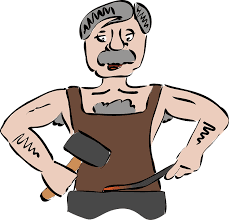
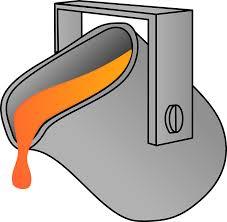
All the time there were many sounds to be heard in the forge. The big bellows groaned and the burning coal cracked. The fire boy shoveled charcoal into the maw of the furnace with a great deal of clatter. Outside roared the waterfall, and a sharp north wind whipped the rain against the brick-tiled roof.
It was probably on account of all this noise that the blacksmith did not notice that a man had opened the gate and entered the forge, until he stood close up to the furnace.
Surely it was nothing unusual for poor vagabonds without any better shelter for the night to be attracted to the forge by the glow of light which escaped through the sooty panes, and to come in to warm themselves in front of the fire. The blacksmiths glanced only casually and indifferently at the intruder. He looked the way people of his type usually did, with a long beard, dirty, ragged, and with a bunch of rattraps dangling on his chest.
Sooty panes: window panes covered in soot ( black powder produced when coal, wood etc is burned.
He asked permission to stay, and the master blacksmith nodded a haughty consent without honoring him with a single word.
Haughty: arrogant.
The tramp did not say anything, either. He had not come there to talk but only to warm himself and sleep. In those days the Ramsjo iron mill was owned by a very prominent ironmaster, whose greatest ambition was to ship out good iron to the market. He watched both night and day to see that the work was done as well as possible, and at this very moment he came into the forge on one of his nightly rounds of inspection.
Naturally the first thing he saw was the tall ragamuffin who had eased his way so close to the furnace that steam rose from his wet rags. The ironmaster did not follow the example of the blacksmiths, who had hardly deigned to look at the stranger. He walked close up to him, looked him over very carefully, and then tore off his slouch hat to get a better view of his face.
Ragamuffin: A person in rags
Deigned: do something that one considers to be beneath one's dignity
Slouch hat: hat bend on one side of the head.
‘‘But of course it is you, Nils Olof!’’ he said. “How you do look!” The man with the rattraps had never before seen the ironmaster at Ramsjo and did not even know what his name was. But it occurred to him that if the fine gentleman thought he was an old acquaintance, he might perhaps throw him a couple of kronor. Therefore he did not want to undeceive him all at once.
To go along up to the manor house and be received by the owner like an old regimental comrade — that, however, did not please the tramp. ‘No, I couldn’t think of it!’’ he said, looking quite alarmed. He thought of the thirty kronor. To go up to the manor house would be like throwing himself voluntarily into the lion’s den. He only wanted a chance to sleep here in the forge and then sneak away as inconspicuously as possible
The ironmaster assumed that he felt embarrassed because of his miserable clothing.
‘‘Please don’t think that I have such a fine home that you cannot show yourself there’’, He said... ‘‘Elizabeth is dead, as you may already have heard. My boys are abroad, and there is no one at home except my oldest daughter and myself. We were just saying that it was too bad we didn’t have any company for Christmas. Now come along with me and help us make the Christmas food disappear a little faster.”
But the stranger said no, and no, and again no, and the ironmaster saw that he must give in. ‘‘It looks as though Captain von Stahle preferred to stay with you tonight, Stjernstrom’’, he said to the master blacksmith, and turned on his heel.
But he laughed to himself as he went away, and the blacksmith, who knew him, understood very well that he had not said his last word.
It was not more than half an hour before they heard the sound of carriage wheels outside the forge, and a new guest came in, but this time it was not the ironmaster. He had sent his daughter, apparently hoping that she would have better powers of persuasion than he himself.

She entered, followed by a valet, carrying on his arm a big fur coat. She was not at all pretty, but seemed modest and quite shy. In the forge everything was just as it had been earlier in the evening. The master blacksmith and his apprentice still sat on their bench, and iron and charcoal still glowed in the furnace. The stranger had stretched himself out on the floor and lay with a piece of pig iron under his head and his hat pulled down over his eyes. As soon as the young girl caught sight of him, she went up and lifted his hat. The man was evidently used to sleeping with one eye open. He jumped up abruptly and seemed to be quite frightened.
‘‘My name is Edla Willmansson,’’ said the young girl. ‘‘My father came home and said that you wanted to sleep here in the forge tonight, and then I asked permission to come and bring you home to us. I am so sorry, Captain, that you are having such a hard time.’’
She looked at him compassionately, with her heavy eyes, and then she noticed that the man was afraid. ‘‘Either he has stolen something or else he has escaped from, jail’’, she thought, and added quickly, “You may be sure, Captain, that you will be allowed to leave us just as freely as you came. Only please stay with us over Christmas Eve.’’
Compassionately: showing sympathy for others
She said this in such a friendly manner that the rattrap peddler must have felt confidence in her. ‘‘It would never have occurred to me that you would bother with me yourself, miss,’’ he said. ‘’I will come at once.’’

He accepted the fur coat, which the valet handed him with a deep bow, threw it over his rags, and followed the young lady out to the carriage, without granting the astonished blacksmiths so much as a glance. But while he was riding up to the manor house he had evil forebodings.
‘‘Why the devil did I take that fellow’s money?’’ he thought. ‘‘Now I am sitting in the trap and will never get out of it.’
“It is queer that things have gone downhill with him as badly as that,” said the daughter. “Last night I did not think there was anything about him to show that he had once been an educated man.” “You must have patience, my little girl,” said the father. “As soon as he gets clean and dressed up, you will see something different. Last night he was naturally embarrassed. The tramp manners will fall away from him with the tramp clothes.”
But although his guest was now so well groomed, the ironmaster did not seem pleased. He looked at him with puckered brow, and it was easy to understand that when he had seen the strange fellow in the uncertain reflection from the furnace he might have made a mistake, but that now, when he stood there in broad daylight, it was impossible to mistake him for an old acquaintance. “What does this mean?” he thundered. The stranger made no attempt to dissimulate. He saw at once that the splendor had come to an end.
“It is not my fault, sir,” he said. “I never pretended to be anything but a poor trader, and I pleaded and begged to be allowed to stay in the forge. But no harm has been done. At worst I can put on my rags again and go away”. “Well,” said the ironmaster, hesitating a little, “it was not quite honest, either. You must admit that, and I should not be surprised if the sheriff would like to have something to say in the matter.”

The tramp took a step forward and struck the table with his fist. “Now I am going to tell you, Mr. Ironmaster, how things are,” he said. “This whole world is nothing but a big rattrap. All the good things that are offered to you are nothing but cheese rinds and bits of pork, set out to drag a poor fellow into trouble. And if the sheriff comes now and locks me up for this, then you, Mr. Ironmaster, must remember that a day may come when you yourself may want to get a big piece of pork, and then you will get caught in the trap.”
Fist: A person’s hand bent
The ironmaster began to laugh. “That was not so badly said, my good fellow. Perhaps we should let the sheriff alone on Christmas Eve. But now get out of here as fast as you can.”
But just as the man was opening the door, the daughter said, “I think he ought to stay with us today. I don’t want him to go.” And with that she went and closed the door. “What in the world are you doing?” said the father. The daughter stood there quite embarrassed and hardly knew what to answer. That morning she had felt so happy when she thought how homelike and Christmassy she was going to make things for the poor hungry wretch. She could not get away from the idea all at once, and that was why she had interceded for the vagabond.
“I am thinking of this stranger here,” said the young girl. “He walks and walks the whole year long, and there is probably not a single place in the whole country where he is welcome and can feel at home. Wherever he turns he is chased away. Always he is afraid of being arrested and cross-examined. I should like to have him enjoy a day of peace with us here — just one in the whole year.” The ironmaster mumbled something in his beard. He could not bring himself to oppose her. “It was all a mistake, of course,” she continued. “But anyway I don’t think we ought to chase away a human being whom we have asked to come here, and to whom we have promised Christmas cheer.”
The man with the rattraps said not a word; he only sat down and helped himself to the food. Time after time he looked at the young girl who had interceded for him. Why had she done it? What could the crazy idea be?
.
After that, Christmas Eve at Ramsjo passed just as it always had. The stranger did not cause any trouble because he did nothing but sleep. The whole forenoon he lay on the sofa in one of the guest rooms and slept at one stretch. At noon they woke him up so that he could have his share of the good Christmas fare, but after that he slept again. It seemed as though for many years he had not been able to sleep as quietly and safely as here at Ramsjo.
In the evening, when the Christmas tree was lighted, they woke him up again, and he stood for a while in the drawing room, blinking as though the candlelight hurt him, but after that he disappeared again. Two hours later he was aroused once more. He then had to go down into the dining room and eat the Christmas fish and porridge.

As soon as they got up from the table he went around to each one present and said thank you and good night, but when he came to the young girl she gave him to understand that it was her father’s intention that the suit which he wore was to be a Christmas present — he did not have to return it; and if he wanted to spend next Christmas Eve in a place where he could rest in peace, and be sure that no evil would befall him, he would be welcomed back again.
.
The man with the rattraps did not answer anything to this. He only stared at the young girl in boundless amazement. The next morning the ironmaster and his daughter got up in good season to go to the early Christmas service. Their guest was still asleep, and they did not disturb him.
When, at about ten o’clock, they drove back from the church, the young girl sat and hung her head even more dejectedly than usual. At church she had learned that one of the old crofters of the ironworks had been robbed by a man who went around selling rattraps. “Yes, that was a fine fellow you let into the house,” said her father. “I only wonder how many silver spoons are left in the cupboard by this time.”
Dejected: sad


FLOW CHART FOR THE CHAPTER
🔹 The Peddler’s Life
↓
Poor, lonely man → Makes and sells rattraps → Begs and steals to survive → Cynical view: "The world is a rattrap"
↓
🔹 Stays at Crofter’s Cottage
↓
Crofter shows kindness → Gives food and shelter → Shows 30 kronor (hard-earned money)
↓
Peddler steals the money → Leaves secretly
↓
🔹 Lost in the Forest
↓
Feels trapped like a rat → Realises he fell for the "world’s bait"
↓
Finds Ramsjö Ironworks for shelter
↓
🔹 Mistaken Identity at Ironworks
↓
Ironmaster mistakes him for old friend (Captain von Stahle) → Invites him home
↓
Peddler refuses at first → Later agrees after fresh clothes are offered
↓
🔹 At the Ironmaster’s House
↓
Truth is revealed → Ironmaster angry → Wants to throw him out
↓
Edla Willmansson (daughter) intervenes → Insists he stays for Christmas
↓
🔹 Change in the Peddler
↓
Edla’s kindness moves him → He gets new clothes, good food, respect
↓
Feels guilty → Leaves next morning quietly
↓
Leaves a letter and returns the stolen money → Signs as "Captain von Stahle"
↓
🔹 The Message
↓
The world is a rattrap, but *love and kindness* can free anyone from it.
The ironmaster mistook him as his old companion Captain Von Stahle; he showed his kindness to him and invited him to his house for Christmas Eve. The peddler knew that the ironmaster was making a mistake by thinking him to be his old friend but here also he did not clear the air and simply accepted the invitation. He did this so that the ironmaster may give him some money out of pity.
Elda Williamson who was the iron master’s daughter invited him to their house in a very friendly way. Also, she insisted her father to let him stay for Christmas Eve even after it was revealed that he was not Captain Von Stahle. The kind nature of Elda changed the peddler and he not only thanked her by gifting a rattrap for being so kind and caring but also requested her to return the stolen money to the old crofter.
Q2- What are the instances in the story that show that the character of the ironmaster is different from that of his daughter in many ways?
Q3- The story has many instances of unexpected reactions from the characters to others’ behaviour. Pick out instances of these surprises?
Q4- What made the peddler finally change his ways?
Ans- Edla Willimansson’s kindness reformed the peddler. Her kindness, compassion and generosity killed the thief in him. He gifted her a rattrap. Also, he returned the three ten kronor notes that he had stolen from the crofter’s house. He requested her to return the money to the old crofter. He wrote a letter to her, thanking her for treating him well just like she would have treated a real captain.
Q5- How does the metaphor of the rattrap serve to highlight the human predicament?
Ans- The world tempts the human beings by various good things such as the luxuries and joys, food and shelter, clothing and warmth, etc. They are just like the bait which is planted to trap someone in the rattrap of the world. In the story the peddler was attracted to the three ten kronors of the crofter, which he stole from him. Later on, he found himself trapped in the forest as he planned to hide himself by walking through the woods. When he got trapped, he thought that this was a punishment for his sin of getting lured by the money.
Q6- The peddler comes out as a person with a subtle sense of humour. How does this serve in lightening the seriousness of the theme of the story and also endear him to us?
Ans- We can see the peddler’s sense of humour when he compares the world with a rattrap. Whenever he gets caught due to his own knitted stories, he tries to prove his innocence by believing that he has fallen into the trap of this world which actually is like a rattrap. This lightens the seriousness of the story and makes the reader sympathize with him.
QUESTIONS FROM TEXTBOOK SOLVED
THINK AS YOU READ
Q1. From where did the peddler get the idea of the world being a rattrap?
Ans: The peddler had been thinking of his rattraps when suddenly he was struck by the idea that the whole world was nothing but a big rattrap. It existed only to set baits for people. It offered riches and joys, shelter and food, heat and clothing in the same manner as the rattrap offered cheese and pork. As soon as someone let himself be tempted to touch the bait, it closed in on him, and then everything came to an end.
Q2. Why was he amused by this idea?
Ans: His own life was sad and monotonous. He walked laboriously from place to place. The world had never been kind to him. So, during his gloomy ploddings, this idea became his favourite pastime. He was amused how people let themselves be caught in the dangerous snare and how others were still circling around the bait.
Q3. Did the peddler expect the kind of hospitality that he received from the crofter?
Ans: The crofter served him porridge for supper and tobacco for his pipe. He also played a game of cards with him till bed time. This hospitality was unexpected as people usually made sour faces when the peddler asked for shelter.
Q4. Why was the crofter so talkative and friendly with the peddler?
Ans: The crofter’s circumstances and temperament made him so talkative and friendly with the peddler. Since he had no wife or child, he was happy to get someone to talk to in his loneliness. Secondly, he was quite generous with his confidences.
Q5. Why did he show the thirty kronor to the peddler?
Ans: The crofter had told the peddler that by supplying his cow’s milk to the creamery, he had received thirty kronor in payment. The peddler seemed to doubt it. So, in order to assure his guest of the truth he showed the thirty kronor to the peddler.
Q6. Did the peddler respect the confidence reposed in him by the crofter?
Ans: No, the peddler did not respect the confidence reposed in him by the crofter. At the very first opportunity that he got, he smashed the window pane, took out the money and hung the leather pouch back in its place. Then he went away.
THINK AS YOU READ
Q1. What made the peddler think that he had indeed fallen into a rattrap?
Ans: The peddler realised that he must not walk on the public highway with the stolen money in his pocket. He went into the woods. He kept walking without coming to the end of the wood. Then he realised that he had fallen in the rattrap. He had let himself befooled by a bait and had been caught in.
Q2. Why did the ironmaster speak kindly to the peddler and invite him home?
Ans: The ironmaster walked closely up to the peddler. In the uncertain reflection from the furnace, he mistook the man as his old regimental comrade, Captain Von Stahle. He addressed the stranger as Nils Olof, spoke very kindly and invited him home.
Q3. Why did the peddler decline the invitation?
Ans: The peddler knew that the ironmaster had mistaken him for his old regimental comrade. Secondly, he had stolen money—thirty kronor—on him. Going to the ironmaster’s residence would be like entering the lion’s den. So, he declined the invitation.
THINK AS YOU READ
Q1. What made the peddler accept Edla Willmansson’s invitation?
Ans: Miss Edla Willmansson looked at the peddler quite compassionately. She noticed that the man was afraid. She assured him that he would be allowed to leave just as freely as he came. She requested him to stay with them over Christmas Eve. Her friendly manner made the peddler feel confidence in her and accept her invitation.
Q2. What doubts did Edla have about the peddler?
Ans: As Edla lifted the peddler’s hat, he jumped up abruptly and seemed to be quite frightened. Even her kind looks, disclosure of her name and purpose of visit failed to calm him. From his fear, she thought that either he had stolen something or he had escaped from jail.
Q3. When did the ironmaster realise his mistake?
Ans: Next morning, the stranger was cleaned and well-dressed. The valet had bathed him, cut his hair and shaved him. He was led to the dining room for breakfast. The ironmaster saw him in broad daylight. It was impossible to mistake him for an old acquaintance now. Then the ironmaster realised his mistake and threatened to call the Sheriff.
Q4. How did the peddler defend himself against not having revealed his true identity?
Ans: The peddler explained that he had not tried to pretend as his acquaintance. He was not at fault. All along he had maintained that he was a poor trader. He had pleaded and begged to be allowed to stay in the forge. No harm had been done by his stay. He was willing to put on his rags again and go away.
Q5. Why did Edla still entertain the peddler even after she knew the truth about him?
Ans: Edla did not think it proper on their part to chase away a human being whom they had asked to come to their house and had promised him Christmas cheer. She understood the reality of the peddler’s life and wanted him to enjoy a day of peace with them. Hence, she still entertained the peddler even after knowing the truth about him.
THINK AS YOU READ
Q1. Why was Edla happy to see the gift left by the peddler?
Ans: As soon as Edla opened the package of the gift, the contents came into view. She found a small rattrap with three wrinkled ten kronor notes and a letter addressed to her. The peddler wanted to be nice in return as she had been so nice to him all day long. He did not want her to be embarrased at the Christmas season by a thief.
Q2.Why did the peddler sign himself as Captain von Stahle?
Ans: The ironmaster has invited the peddler to his house mistaking him for Captain von Stahle. He was welcomed there and looked after as captain even after the reality became known. The peddler got a chance to redeem himself from dishonest ways by acting as an honourable Captain.
EXTRA QUESTIONS FOR PRACTICE WITH ANSWER HINTS
📘 1. Title-Based Question
Q. Justify the title “The Rattrap”.
Answer Hint:
• Metaphorical use of rattrap = world full of temptations (money, shelter, food).
• People get trapped like rats, just as the peddler did.
• The title reflects both literal (he sells rattraps) and symbolic meanings.
• Ultimately, realization and redemption are part of this trap.
🎯 2. Theme-Based Question
Q. What is the central theme of the story “The Rattrap”?
Answer Hint:
• Life is full of temptations (the metaphorical rattrap).
• Kindness and empathy can reform even the most lost souls.
• Redemption through love and dignity.
• Judgment vs. compassion.
🌟 3. Value-Based Question
Q. What values does Edla Willmansson represent in the story?
Answer Hint:
• Empathy, non-judgmental attitude, patience.
• Belief in second chances.
• True Christmas spirit of generosity and acceptance.
✅ 4. Competency-Based Question
Q. How did the peddler’s experience at the ironmaster’s home change his outlook on life?
Answer Hint:
• Treated with dignity and respect by Edla despite knowing the truth.
• Felt trusted and honoured, especially on Christmas.
• Developed self-respect → decides to reform.
• Leaves stolen money and signs off as “Captain von Stahle”.
🔹 Q. How does the story reflect the idea that basic human goodness can be awakened in even the most unlikely individuals?
Answer Hint:
• The peddler was a thief, cynical and isolated.
• Kindness shown by Edla helped him rediscover his self-worth.
• He returns the stolen money and leaves a heartfelt note.
• Shows transformation is possible with compassion.
🔹 Q. Why did the peddler refuse the ironmaster’s invitation initially but later agreed?
Answer Hint:
• Initially refused due to fear of being exposed.
• Agreed later due to the temptation of warm shelter and good food (a “bait”).
• Reflects his vulnerability and need, aligning with the theme of the rattrap.
🔹 Q. What does the change in the peddler’s behavior reveal about the impact of empathy?
Answer Hint:
• He shifts from being selfish and deceitful to honest and respectful.
• Edla’s empathy made him feel human and worthy.
• Shows that dignity and trust can heal moral wounds.
🔁 5. Situation-Based Question
Q. Imagine you are the peddler. Write a diary entry the night after Edla treated you with respect and kindness.
Answer Hint:
• Express surprise and guilt for being treated so well.
• Internal struggle between stealing and confessing.
• Decision to return money and leave letter.
• Realisation: “I’m more than a thief – I’m a human.”
🔹 Q. Imagine you are Edla. How would you justify your decision to let the peddler stay to your father?
Answer Hint (as Edla):
• He seemed lonely and miserable — needed help more than punishment.
• Christmas is a time for compassion and giving.
• Even if he cheated us, we could offer him one day of peace and respect.
🔹 Q. Imagine the crofter receives the 30 kronor back with a note. What would his reaction be? Write his inner thoughts.
Answer Hint:
• Shocked and surprised — had not expected the thief to return the money.
• Might reflect on his own role in trusting and opening up.
• Feels justice and human goodness restored.
🔹 Q. If the ironmaster had thrown the peddler out immediately, how would the story change?
Answer Hint:
• No transformation would occur.
• No chance for the peddler to feel respected or trusted.
• Story would reinforce cynicism rather than hope.
📝 6. Creative Writing-Based Question
Q. Write a letter from the peddler (as Captain von Stahle) to the crofter, apologizing and explaining his change of heart.
Answer Hint:
• Express regret for stealing the 30 kronor.
• Describe how Edla’s kindness made him reflect.
• Share desire to lead a better life.
• Promise to never betray trust again.
🔹 Q. Write a short story from the peddler’s point of view titled: “The Day I Found Myself”.
Answer Hint:
• Start from his life of struggle and crime.
• Narrate how Edla’s kindness touched him deeply.
• End with his decision to return the money and leave as a better man.
🔹 Q. Write a dialogue between Edla and her father after discovering the note and money left by the peddler.
Answer Hint:
• Father praises Edla’s instincts.
• They both feel proud and emotional.
• Realize they made a lasting difference in someone’s life.
🔹 Q. Imagine the peddler meets another poor man like himself. Write their conversation.
Answer Hint:
• Peddler shares how kindness changed him.
• Advises the man not to lose hope.
• Tells him about the “trap” and how to escape it.
🔹 Q. As a journalist, write a feature article titled: “The Miracle of Christmas at Ramsjö Ironworks”.
Answer Hint:
• Cover story of a mysterious stranger mistaken for a captain.
• Human interest angle: a thief transformed by kindness.
• Ends on a note of hope, generosity, and moral redemption.
📚 7. Analytical Question
Q. Why did Edla trust the peddler even after knowing he was not a captain? What does this show about her?
Answer Hint:
• Her instincts told her he was not dangerous.
• She believed in giving people a chance to be better.
• Shows her strength of character and moral superiority.
💡 8. Extract-Based Question
Q. “The world had never been very kind to him, so it gave him unwanted joy to think ill of it…”
What does this line reveal about the peddler’s mindset?
Answer Hint:
• He had become negative and bitter due to hardship.
• Found satisfaction in believing the world was like a trap.
• Symbolic of how poverty can shape perceptions.
✍️ 9. HOTS (Higher Order Thinking Skills)
Q. If the ironmaster had not misjudged the peddler’s identity, would the transformation still happen?
Answer Hint:
• Possibly not.
• The mistake led to Edla’s involvement.
• Her treatment was key to the peddler’s change.
• Sometimes mistakes lead to unexpected positive outcomes.
💬 10. Discussion-Based Question
Q. “One act of kindness can change a life.” Discuss this in the context of “The Rattrap”.
Answer Hint:
• Edla’s single act of kindness led to the peddler’s complete moral transformation.
• She didn’t judge him.
• Her compassion made him believe in goodness again.


Comments
Post a Comment